When writing an academic paper, dissertation, or research report, one of the most confusing parts for students is the appendix. Many writers wonder what it is, what belongs there, and how to organize it correctly. Understanding what is an appendix in a paper can make your work look more professional, organized, and credible.
Students often get confused when working on reports, whether it’s preparing the appendix for a paper or writing an experiment 8 pre-laboratory assignment. Both require proper organization of data and clarity in presentation.
In this blog, we will explain everything you need to know about appendices — their definition, purpose, structure, and common mistakes to avoid. Whether you are a college student, a researcher, or someone searching “help me with assignment”, this guide will help you write an excellent appendix confidently.
-
Understanding What Is an Appendix in a Paper
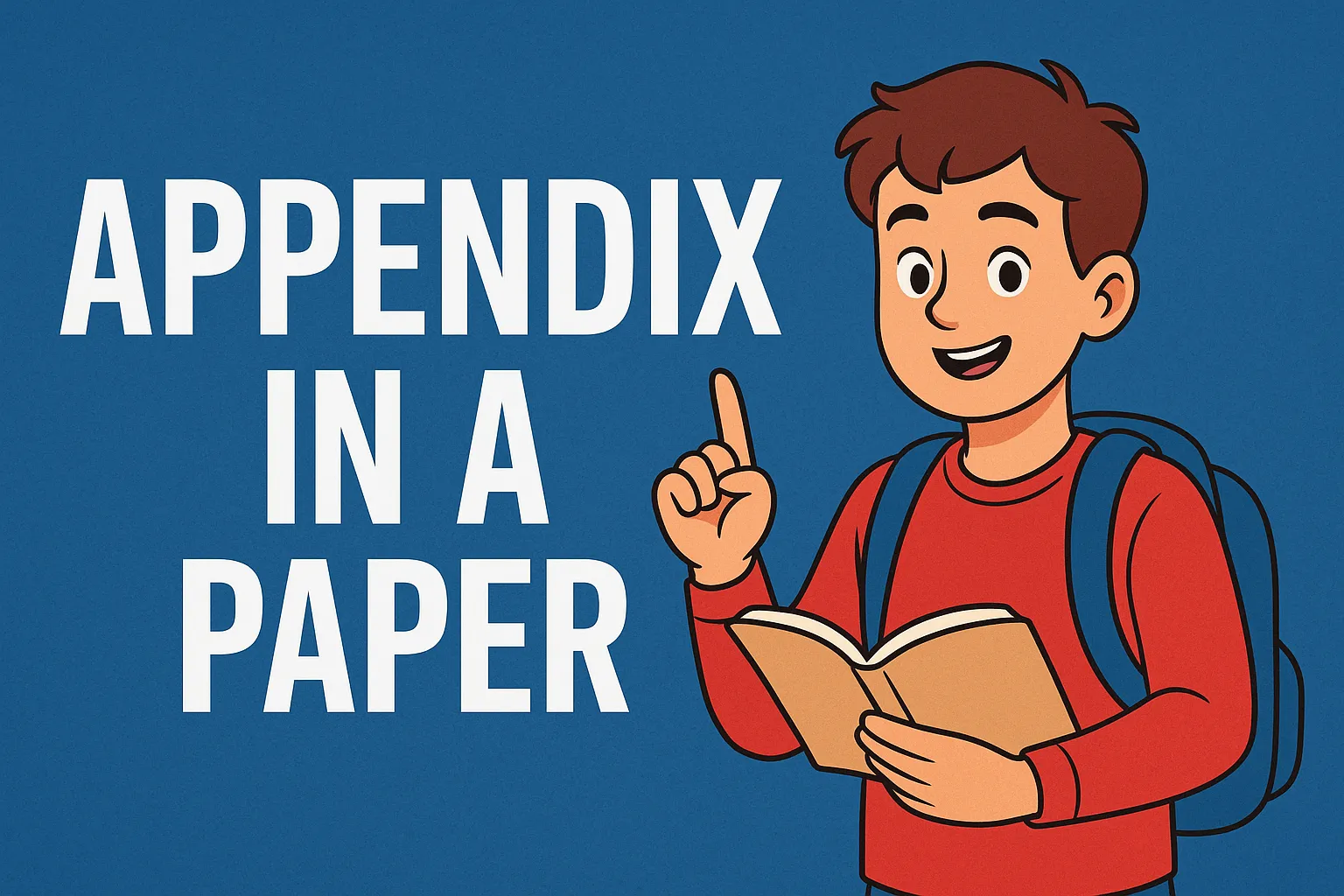
Before we explore how to write it, you must first understand what is an appendix in a paper.
An appendix (plural: appendices) is a section at the end of an academic paper that includes supplementary or additional information which supports your main content but is too detailed or too bulky to include in the body of the text.
Think of it as a storage space for extra information that helps the reader understand your research better without interrupting the flow of your main discussion.
Examples of What You Can Include in an Appendix
- Raw data or statistics that support your findings
- Detailed tables or charts
- Questionnaires, interview transcripts, or survey forms
- Copies of letters, consent forms, or ethics approvals
- Sample calculations or technical details
- Large images or diagrams that would disrupt the main text
- Additional case studies or supplementary literature reviews
For example, if you conducted a survey in your research and have 10 pages of participant responses or rhetorical analysis essay, you can summarize the key findings in your paper but include the full list of responses in the appendix.
-
Why Is the Appendix Important?
Many students underestimate the importance of an appendix. However, it plays a vital role in enhancing your research’s transparency, credibility, and clarity.
-
It Keeps the Main Text Clear and Concise
Including too much detailed information in the main body can make your paper confusing. The appendix allows you to move lengthy data or background material out of the main discussion while keeping it accessible.
-
It Demonstrates Research Depth
An appendix shows that you conducted thorough research. By providing extra materials like raw data or interview transcripts, you allow readers (and reviewers) to verify your results or methods.
-
It Builds Academic Credibility
Including well-organized appendices indicates professionalism. It shows you know how to handle and present complex information — a key quality in academic writing.
-
It Enhances Reader Understanding
Sometimes, certain materials like diagrams or sample questionnaires can make your argument more understandable. By including them in an appendix, you help readers grasp your work better.
-
How to Write an Appendix: Step-by-Step
Now that you know what is an appendix in a paper, let’s go through the steps to prepare one properly.
1: Identify What to Include
2: Organize Your Material
3: Label Each Appendix Clearly
4: Refer to the Appendix in Your Main Text
5: Format Properly
-
Common Mistakes Students Make with Appendices
Even when students understand what is an appendix in a paper, they often make small but significant mistakes that reduce the quality of their work. Let’s discuss the most common ones and how to avoid them.
Mistake 1: Including Irrelevant Information
Some students put everything that couldn’t fit in the main text into the appendix. This makes the appendix messy and unnecessary.
How to avoid it: Include only materials that directly support your paper. If it doesn’t strengthen your argument or provide clarity, leave it out.
Mistake 2: Forgetting to Reference the Appendix
If you never mention the appendix in your main text, readers may not even know it exists.
How to avoid it: Always cite the appendix at least once within your paper where it’s relevant. For example, “See Appendix A for complete survey results.”
Mistake 3: Poor Organization
Sometimes, appendices are thrown together without structure — making it difficult for readers to navigate.
How to avoid it: Label each appendix (A, B, C, etc.) and give each a clear title. Arrange them in the same order as they appear in your paper.
Mistake 4: Not Following the Required Format
Different institutions and citation styles have their own rules for appendices.
How to avoid it: Review your instructor’s or department’s formatting guidelines before submission. If unsure, ask your professor or look at sample papers.
Mistake 5: Including Essential Information
An appendix should supplement, not replace, the main text. Some students mistakenly place critical results or analysis only in the appendix.
How to avoid it: All key findings and discussions must be in the main text. The appendix should only provide additional context or evidence.
Mistake 6: Not Numbering Pages or Sections
An unnumbered or poorly formatted appendix can confuse readers and make your work look careless.
How to avoid it: Number the pages of your appendices consecutively with the rest of your paper.
-
Tips for Writing a Perfect Appendix
To make your appendix professional and well-organized, follow these expert tips:
-
Keep It Consistent
Use the same font style, size, and spacing as your main paper. Consistency shows attention to detail and professionalism.
-
Use Headings and Subheadings
If your appendix contains a lot of data, use headings and subheadings to make it easy to read. For example:
- Participant Demographics
- Interview Questions
- Raw Data Tables
-
Avoid Overloading with Graphics
While visuals are helpful, don’t overload your appendix with unnecessary images or charts. Only include those directly related to your study.
- Maintain Data Accuracy
Double-check that all tables, charts, and numbers in the appendix match the references in your main paper. Mistakes here can affect your research credibility.
-
Cross-Reference Carefully
Ensure that any appendix you refer to in the main text matches the correct label (A, B, C, etc.). Mislabeling can confuse your reader.
-
Keep It Professional
Avoid using informal language or personal comments in your appendix. Treat it as part of your research document, not a rough note section.
-
The Relationship Between Appendix and Academic Success
Many students searching “help me with assignment” online are often struggling not with the main content but with technical sections like appendices, references, and formatting.
Understanding how to structure these elements properly can make your paper look polished and increase your grades. Professors appreciate students who demonstrate a strong grasp of formatting and presentation it reflects your academic discipline.
Additionally, if you ever plan to publish your research, a well-structured appendix enhances your paper’s readability and transparency, making it more credible for peer review.
-
Appendix Example: How It Looks
Here’s a simplified example to show what an appendix might look like in your paper.
Appendix A: Survey Questionnaire
Title: Student Study Habits and Academic Performance
Purpose: This questionnaire was used to collect data on students’ study routines and exam performance.
- How many hours per day do you study?
- What study environment do you prefer (quiet, music, group)?
- How often do you review your notes before exams?
- What methods do you find most effective for memorizing information?
Appendix B: Raw Data Table
| Participant | Hours Studied | GPA | Study Environment |
|---|---|---|---|
| 1 | 2 | 3.5 | Quiet |
| 2 | 5 | 3.9 | Group |
| 3 | 1 | 2.8 | Music |
By keeping your appendix well-organized, labeled, and formatted, your paper will be much easier to follow and more professional.
-
How to Get Extra Help with Appendices
If you still find yourself struggling to organize your appendix or format your paper correctly, you can always seek academic assistance. Many students search online for phrases like “help me with assignment” to get professional guidance from writing experts or tutors.
Such support can be especially helpful if:
- You’re unsure how to format multiple appendices.
- You don’t know what materials belong in an appendix.
- You want your paper to follow strict citation styles (APA, MLA, etc.).
Getting help doesn’t mean you’re weak — it shows you care about accuracy and presentation. Expert feedback can help you master not only your appendix or narrative essay example but your entire academic writing process.
-
Conclusion
So, what is an appendix in a paper? It is a powerful tool that allows you to include detailed supporting information without cluttering your main discussion. When used correctly, it demonstrates professionalism, organization, and research depth.
However, it’s crucial to remember:
- Keep your appendix relevant and well-structured.
- Always refer to it within your paper.
- Follow proper formatting guidelines.
- Avoid common mistakes like including essential information or disorganized data.
By understanding the role and structure of an appendix — and by asking for “help me with assignment” when needed you can significantly improve the quality of your academic writing.
A well-prepared appendix or process analysis essay may not be the most visible part of your paper, but it reflects the effort, discipline, and precision that define excellent research.
Frequently Asked Questions
What is an appendix in a paper?
An appendix in a paper is an extra section placed after your references that includes supplementary information such as charts, data, interview transcripts, or extended explanations. It provides context without cluttering the main content. If you’re unsure how to structure it, Assignment Aid offers easy-to-follow academic resources to help with formatting and referencing.
2. What should I include in an appendix?
Include materials that support your research but are too detailed for the main text — for example, raw data, sample questionnaires, or tables. When writing complex reports or dissertations, our team at Assignment Aid can guide you on how to integrate appendices properly while maintaining clear academic flow.
3. How do I format an appendix in APA or MLA style?
In APA, each appendix should have a title (like Appendix A: Survey Questions) and appear after your references. In MLA, it follows similar rules but labeling can vary slightly. For formatting and citation help, Assignment Aid provides detailed examples through our myassignmenthelp resources.
4. Do I need to reference items in my appendix?
Yes! If you refer to something in your appendix, cite it in the main text (e.g., “see Appendix A”). This maintains academic credibility and transparency. And if you ever need help with assignments that include research documentation, Assignment Aid can walk you through every detail.